
When you write a blog, you go through a detailed, lengthy process: researching topics, researching keywords, offering solutions, maintaining a consistent tone, including real data, and much more. If you are putting in so much effort and then stopping after publishing, you are missing out on great opportunities.
The question is how to repurpose old blog posts. Repurposing helps you get more reach without writing from scratch. One blog can turn into social posts, emails, reels, or even new SEO pages. You save time. You stay consistent. And your content works harder for you.
In this blog, we will break down practical ways to reuse your existing blogs. You will learn what to update, what to extract, and how to extend the life of your content across platforms.
How to Repurpose Old Blog Posts
Repurposing works best when you follow a clear process. Do not randomly reuse content. Start with strategy, then execution.
Step 1: Identify the Right Blog Posts
Not every blog needs repurposing. Pick posts that already show potential.
- Blogs with steady organic traffic
- Posts ranking on page 2 or 3
- Evergreen topics that stay relevant
- Blogs with high impressions but low clicks
These posts already have visibility. You just need to amplify them.
Step 2: Refresh and Update the Content
How to repurpose old blog posts by spending just 5-10 minutes? Before reuse, improve the original blog.
- Update old stats and examples
- Add recent data or trends
- Improve headings for clarity
- Insert internal links to newer blogs
This step strengthens SEO and ensures the content stays accurate.
Step 3: Break One Blog Into Smaller Content Pieces
One blog can produce multiple assets.
- Turn sections into standalone tips
- Convert lists into short explanations
- Extract FAQs from the content
This is the core of how to repurpose old blog posts without rewriting everything.
Step 4: Change the Content Format
Same idea, different format.
- Blog → checklist
- Blog → step-by-step guide
- Blog → carousel outline
- Blog → short script
Different formats help the content perform across platforms.
Step 5: Create Supporting Content Around the Same Topic
Use the original blog as a base.
- Write a deeper sub-topic blog
- Create a comparison or example-based post
- Add a “how-to” or “mistakes” blog
This builds topical authority and improves internal linking.
Step 6: Optimize for Distribution
Repurposing fails without distribution.
- Add CTAs to reused content
- Link back to the original blog
- Track performance using analytics
Each repurposed piece should push traffic back to your main content hub.
Step 7: Repeat the Process Quarterly
Content decay is real. Review old blogs every 3 to 6 months.
- Refresh again
- Repurpose again
- Redistribute with new hooks
This keeps your content ecosystem active without burning out your team.
How to Repurpose Blog Content for Social Media
Step 1: Understand the Platform Before Repurposing
Every social media platform behaves differently. The same blog content cannot work everywhere in the same form. Before you repurpose, decide where the content will go. Instagram prefers visuals and short explanations. LinkedIn prefers clarity, stories, and authority. Twitter and Threads work best with sharp opinions and quick insights. This clarity decides how you reshape the blog.
Step 2: Extract Core Ideas From the Blog
Do not try to post the entire blog on social media. Read the blog and identify its strongest ideas. These can be key lessons, bold statements, common mistakes, or step-by-step explanations. Each core idea should stand alone and make sense without context. This step is the foundation of how to repurpose blog content for social media effectively.
Step 3: Rewrite for Scroll Behavior
People scroll fast on social media. Rewrite the extracted ideas in simple language with strong opening lines. Start with a hook that stops the scroll. Then explain the point clearly in short sentences. Avoid long paragraphs. The goal is clarity, not completeness. Social content should spark interest, not explain everything.
Step 4: Convert One Blog Into Multiple Post Types
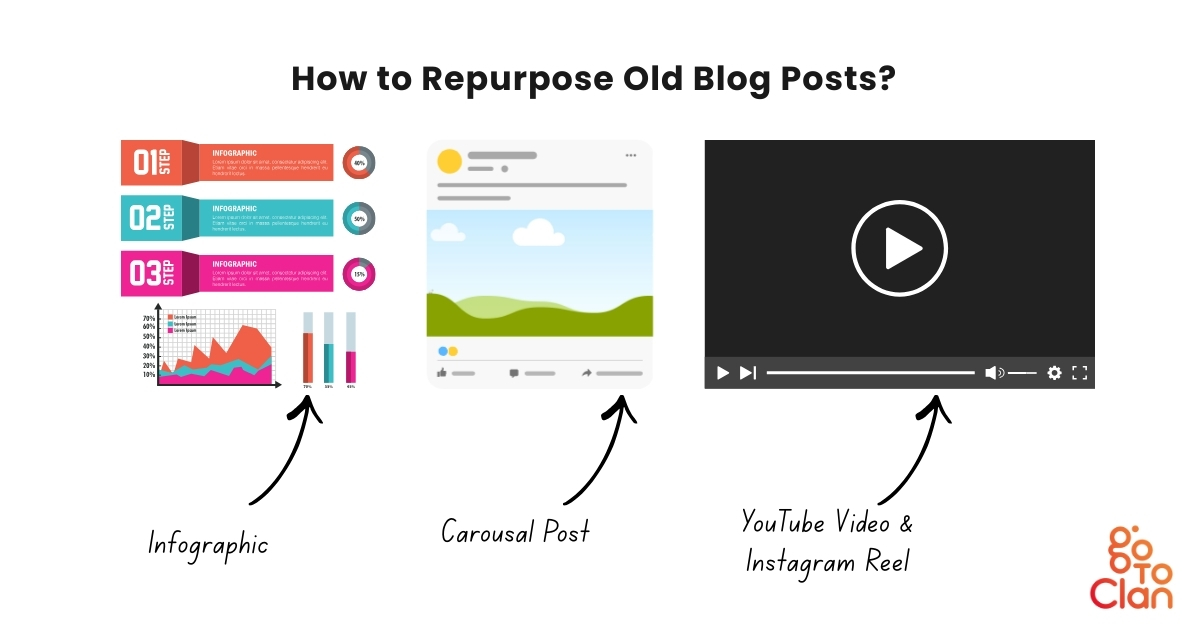
One blog should never become just one post. Turn a single idea into multiple formats. Use the same concept to create a carousel explanation, a short reel script, a quote-style post, and a text-based post. This increases reach without creating new content. You change the format, not the message. For example, I created a simple Infographic out of my blog about the Ansoff Matrix.

Step 5: Adapt the Tone Without Changing the Message
The message stays the same, but the tone changes. On LinkedIn, explain the idea like a professional insight. On Instagram, keep it conversational and visually friendly. On Twitter or Threads, make it direct and opinion-led. This adaptation makes your content feel native to the platform instead of recycled.
Step 6: Add Context, Not Links First
Avoid starting social posts with links. First, give value. Explain the idea in a way that feels complete. Then guide readers to the blog for a deeper understanding. This builds trust and improves engagement. Social media should pull people in, not push them out immediately.
Step 7: Track What Works and Repurpose Again
Not every repurposed post will perform well. Track saves, shares, comments, and clicks. Identify which blog topics perform best on social media. Then reuse those topics again with new hooks or formats. Repurposing is an ongoing system, not a one-time task.
Common Mistakes to Avoid While Repurposing Content
Mistake 1: Copy-Pasting Without Context
Many brands think repurposing means copying lines from a blog and posting them as-is on social media. This rarely works. Blog content is written for readers who are already interested. Social media content is for people who are scrolling with zero intent. When you skip context, the message feels incomplete and ignored. If you are learning how to repurpose old blog posts, always rewrite the idea for the platform instead of lifting the text.
Mistake 2: Ignoring Platform Behavior
Each platform has its own content consumption style. A long explanation that works on LinkedIn may fail on Instagram. A carousel idea may not work as a single tweet. When brands ignore this, repurposed content feels forced and out of place. Effective repurposing starts by understanding how users consume content on that platform, not by pushing the same format everywhere.
Mistake 3: Trying to Say Everything at Once
Blogs aim for completeness. Social media does not. One common mistake is trying to explain the full blog inside one post. This overwhelms the reader and kills engagement. When you repurpose blog content for social media, focus on one strong idea at a time. Leave the detailed explanation for the blog and use social posts to create curiosity.
Mistake 4: Not Linking Back to the Original Blog
Repurposing should drive traffic, not just engagement. Many brands forget to guide readers back to the main blog. This breaks the content loop. Always connect the repurposed content to the original post, either through comments, captions, or follow-up posts. This ensures your efforts support SEO and not just vanity metrics.
Mistake 5: Using the Same Hook Repeatedly
Even strong content fails when the hook stays the same. Reusing the same opening line across platforms or over time makes the content feel repetitive. Change the hook, angle, or opening question while keeping the core idea intact. This keeps the content fresh and improves reach.
Mistake 6: Skipping Performance Review
Repurposing without tracking results leads to guesswork. Many teams move on without checking what worked. Review saves, shares, comments, and clicks. Identify which blog topics perform best after repurposing. This helps you refine how you repurpose old blog posts and build a repeatable system instead of random execution.
Final Words
Repurposing content is a mindset shift. Instead of chasing new ideas every week, you focus on extending the life of what already exists. When you understand how to repurpose old blog posts, your content stays visible for longer and performs better across channels.
Your old blogs are not outdated. They are underused. With the right structure and intent, they can keep driving traffic, engagement, and value without adding more work. Contact Go To Clan to up your content game.