
In this era of AI taking over almost every industry, the food industry is unshaken! If you are planning to start a cloud kitchen, also called a ghost kitchen and virtual kitchen, you are on the right track.
Starting a food business today does not mean fancy interiors, waiters, or 40-page menus. It means smart execution. If you are wondering how to start a cloud kitchen, you are already thinking in the right direction. A cloud kitchen lets you focus on what actually matters: taste, speed, and consistency. No dining tables. No rent drama. Just food that reaches customers fast and hot.
Whether you are exploring how to start a cloud kitchen from home or planning how to start a cloud kitchen on Zomato, the rules stay simple. Cook food people remember. Run the kitchen like a business, not like a hobby. And yes, paperwork and marketing matter as much as your secret masala. Think of a cloud kitchen as a startup that smells delicious.
The ghost kitchen industry grew fast during the pandemic and is still growing strong. Online food delivery makes up 12% of the market today and is expected to reach 20% by 2030. In simple terms, the cloud kitchen (virtual kitchen) market in India is set to grow from ₹9,747 crore in 2024 to ₹24,498 crore by 2030.
Source: IBEF.
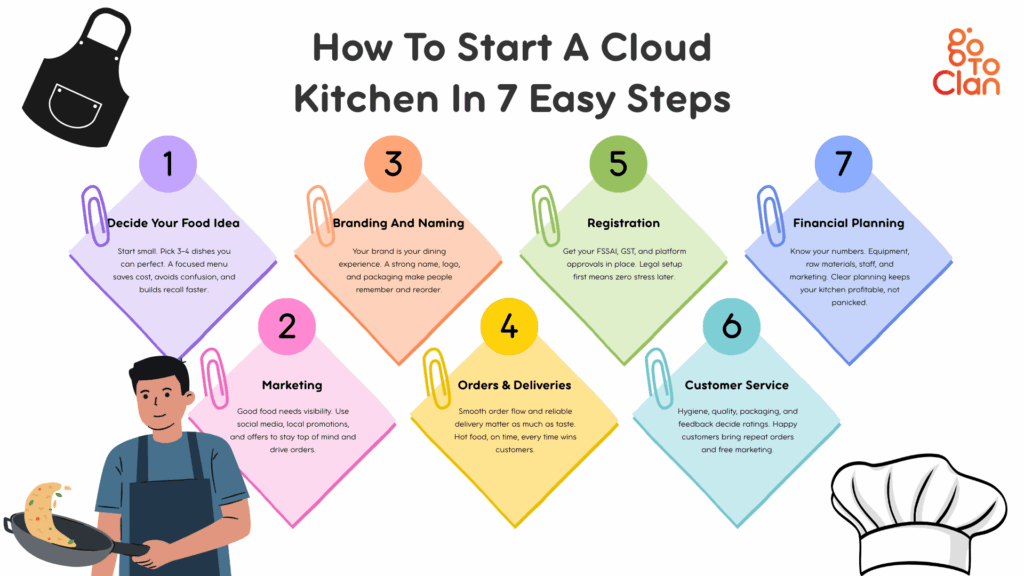
How To Start A Cloud Kitchen In 7 Easy Steps
1. Decide Your Menu First
The biggest mistake people make while learning how to start a cloud kitchen is trying to sell everything. Biryani, pizza, pasta, shakes, desserts, mom’s special sabzi, and suddenly even Chinese. That is not a menu. That is confusion.
A ghost kitchen works best when you pick a clear niche and do it really well. Start with 3 to 4 items. That is it. Master them. Let people remember you for one thing.
Example:
Instead of opening a “multi-cuisine cloud kitchen,” start with only loaded sandwiches. Or just butter chicken and dal makhani. Or only South Indian breakfast. When customers think, “I want that sandwich,” your brand name should pop up in their head. That is how recall works.
A limited menu also helps you control costs, manage raw materials easily, reduce wastage, and maintain consistent taste. You learn faster. Your kitchen runs more smoothly. And your staff does not panic during peak orders.
In short, decide what you want to be famous for first. Fame comes before expansion.
2. Branding And Naming
Good food gets orders. Good branding gets *repeat* orders. This is where many virtual kitchens mess up. They cook amazing food, but name the brand something that sounds like a random Wi-Fi password. If people cannot remember your name, they cannot search for you again.
When you are learning **how to start a cloud kitchen**, branding is not optional. It decides how your brand looks on Zomato, how your packaging feels in the customer’s hand, and whether your kitchen looks premium or forgettable.
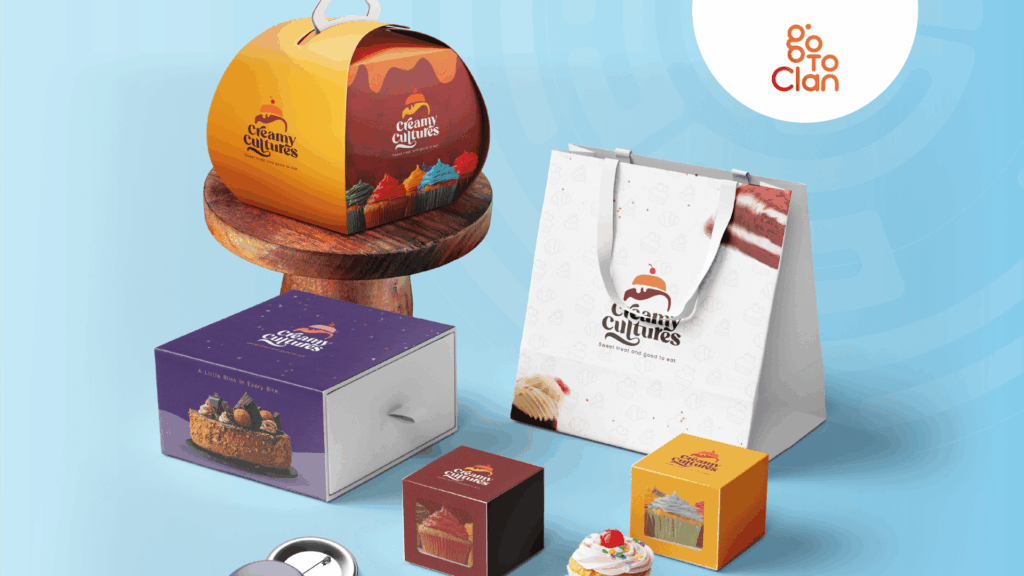
A strong name should be easy to pronounce, easy to remember, and connected to your food story. Your logo should look clean even on a small mobile screen. Your packaging should say, “This brand knows what it is doing,” before the customer even opens the box.
This is exactly where Go To Clan helps. We have already worked with restaurants and food businesses on brand naming, logo design, menu design, and packaging that actually convert first-time buyers into regular customers. We do not design for awards. We design for real orders and real ratings.
Because in a cloud kitchen, your brand is your dining experience. If branding is weak, even great food struggles to survive.
3. Registration And Paperwork
This part is boring, yes.
This part is important, also yes.
Skip this, and your ghost kitchen can shut down faster than an overcooked dosa.
How To Start A Cloud Kitchen From Home
If you are starting from home, you still need basic registrations. Home kitchen does not mean “no rules kitchen.”
You usually need:
- FSSAI registration (non-negotiable)
- Local municipal permission if required
- GST registration if you plan to scale or sell on platforms
- A dedicated cooking space that meets hygiene standards
Think of it this way. If a stranger is eating your food, the government wants proof that you know what you are doing. Fair enough.
Many home-based virtual kitchens start small, get regular orders, and then upgrade their license when volumes increase. Start clean. Start legal. Sleep peacefully.
How To Start A Cloud Kitchen On Zomato
Food delivery platforms like Zomato and Swiggy are growing at 20–30% every year, driven by smartphone usage, a growing middle class, and the rise of contactless delivery after COVID-19. This growth makes cloud kitchens a natural fit for today’s food habits. Source: Meta Tech Insights.
If your goal is visibility and volume, Zomato helps a lot. But Zomato will not onboard you just because your food tastes good.
You will need:
- FSSAI license
- GST details
- Bank account
- Kitchen photos
- Menu with clear pricing
- Packaging details
Once approved, your kitchen goes live, and real customers start judging you with ratings instead of relatives. The onboarding process is structured, and Zomato guides you step by step, but your paperwork must be ready.
Pro tip: Keep all documents scanned and organized beforehand. Zomato delays usually happen due to missing or incorrect paperwork, not because of food quality.
Registration feels like a headache now, but it saves you from bigger migraines later.
Here is the Zomato Cloud Kitchen registration link.
4. Financial Planning
This is where dreams meet Excel sheets. And yes, Excel usually wins.
Smart financial planning keeps your cloud kitchen alive after the first month. Since your menu is already decided, calculating costs becomes much easier. You are not guessing. You are planning.
Start with fixed costs.
This includes equipment like gas stoves, burners, refrigerators, mixers, utensils, and basic kitchen tools. These are mostly one-time expenses. Buy decent quality. Cheap equipment breaks at the worst possible time. Usually, during peak orders.
Next come running costs.
Raw materials, oil, spices, vegetables, packaging boxes, delivery bags, electricity, gas, and water. Because your menu is limited, you know exactly what ingredients you need and how much you will consume daily.
Example:
If you sell only burgers and fries, you can clearly calculate buns per day, patties per week, oil usage, and packaging cost per order. No surprise expenses. No panic buying.
Then factor in people costs.
Even a small virtual kitchen needs help. A cook, a helper, or someone to manage orders. Decide early whether you will do everything yourself or build a small team. Salaries are monthly commitments, not optional tips.
Also, keep a small buffer. Something always goes wrong. A fridge breaks. Prices increase. Zomato charges feel heavier than expected.
Financial planning is not about cutting costs everywhere. It is about knowing where your money is going so your cloud kitchen does not shut down before customers start loving your food.
5. Marketing And Promotion
Great food with zero marketing is like cooking biryani and forgetting to invite people. No one smells it. No one orders it.
Marketing is vital even if you are serving just nearby areas. Your neighbors will not magically discover you. You have to show up where they already are. On their phones.
Start small and smart. Offer free samples to nearby societies. Add a small thank-you note or a free cookie with first orders. Distribute pamphlets in residential areas. Old-school works when done right.
Now comes the real game. Social media.
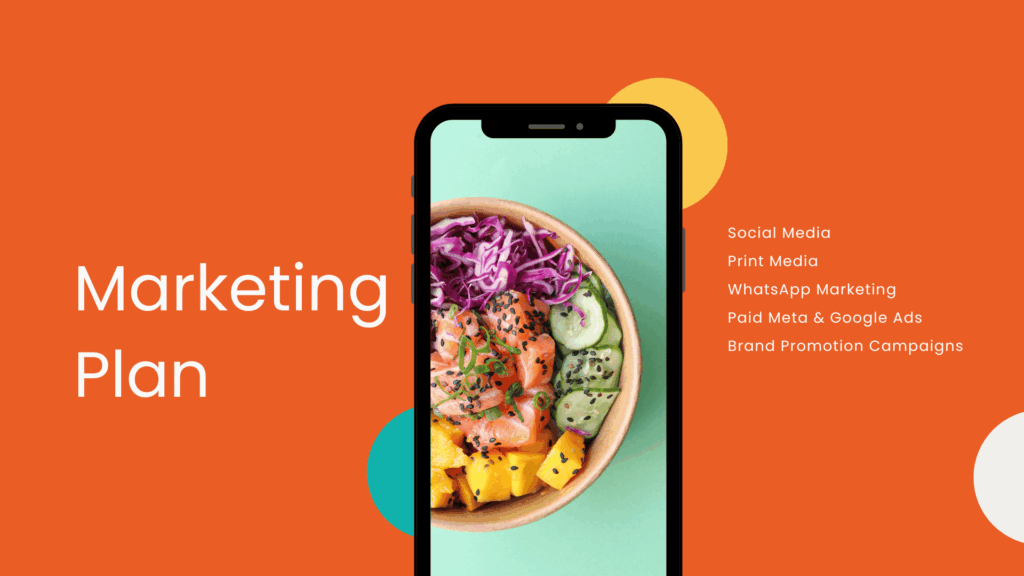
If you truly want to understand how to start a cloud kitchen from home at a professional level, social media marketing is not optional. Instagram reels of food. Behind-the-scenes stories. Customer reviews. Limited-time offers. All of this builds trust before the first order.
Example:
A cloud kitchen posting daily short reels of sizzling momos or melting cheese gets remembered faster than one with no online presence. People eat with their eyes first.
This is where agencies like Go To Clan help. We handle social media marketing for food brands and cloud kitchens that want real visibility, not random likes. From content strategy to ads that actually bring orders, we focus on growth, not noise.
Quick marketing tips:
- Post consistently, not perfectly
- Highlight one hero dish repeatedly
- Show real kitchen scenes. People trust reality
- Use local hashtags and location tags
- Ask happy customers for reviews. Politely. Every time
Marketing is not about shouting. It is about showing up daily until customers start searching for you by name.
Contact Form
"*" indicates required fields
6. Managing Orders And Deliveries
This is where most virtual kitchens either shine or quietly lose customers. Your food can be amazing, but if it arrives late, cold, or mixed up, the customer is already typing a bad review.
Order management should be simple and boring. Boring is good here. Use one system to track orders in real time. No sticky notes. No shouting across the kitchen. No “yeh kis ka order tha?” drama.
Your order management system should sync with your POS and delivery platforms. This helps you track order status, manage stock, and spot delays early. When you know what is happening, you stay in control.
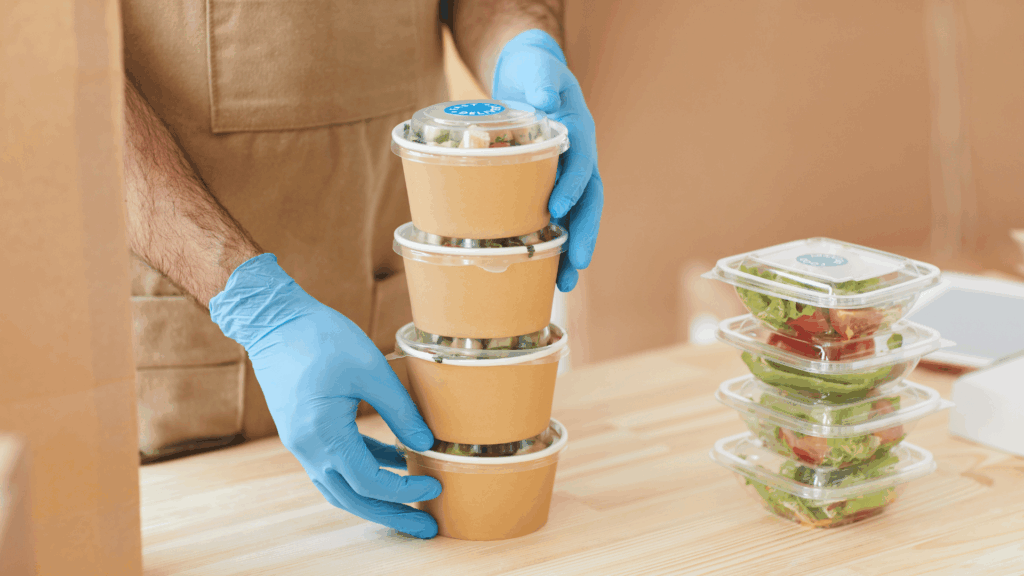
Food quality and hygiene must stay consistent, even during peak hours. Pack food properly so it stays hot and presentable. Remember, delivery is your dining table.
Now, let us talk about in-city delivery partners.
Platforms like Porter are popular for short-distance deliveries. They are reliable but can feel expensive if you depend on them daily. Porter works best for bulk orders or special deliveries, not everyday meals.
Other practical options include:
- Local bike delivery startups in your city
- Hiring dedicated delivery riders on a per-shift basis
- Tie-ups with nearby riders who already do local courier or grocery deliveries
Many successful cloud kitchens use a mix. Zomato or Swiggy for platform orders. Local riders for direct or WhatsApp orders. This reduces dependency and saves money in the long run.
Always track delivery times and customer feedback. If food arrives late or cold repeatedly, fix the delivery system before changing the recipe.
In a ghost kitchen, speed and coordination matter as much as taste. Get this right, and customers keep coming back.
7. Focus On Customer Service
Customer service in a cloud kitchen is not about smiling faces. It is about consistent actions. Every single order.
Hygiene comes first. Always. Clean kitchen, clean hands, clean storage, clean packaging. Customers may never see your kitchen, but they can feel hygiene in the food quality.
Use good-quality raw materials. Cutting corners here always backfires. One bad experience is enough for a customer to never order again.
Actively ask for feedback. Read reviews. Learn from them. If someone complains about portion size or late delivery, fix it instead of ignoring it. Ratings decide your visibility on food platforms more than you think.
Packaging matters more than most people realize. Clean, sturdy, and preferably sustainable packaging builds trust. Leaky boxes and oily bags kill the experience before the food is opened.
Prompt delivery completes the loop. Hot food, delivered on time, with a simple thank-you note, can turn a first-time customer into a regular.
In a cloud kitchen, customer service is silent but powerful. Do it right, and customers market your brand for you.
Conclusion
Starting a cloud kitchen is not complicated. It just needs clarity, planning, and consistency. From deciding a focused menu to branding, registrations, financial planning, marketing, and smooth deliveries, every step plays a role in long-term success.
Whether you are learning how to start a cloud kitchen from home or planning how to start a cloud kitchen on Zomato, the approach stays the same. Treat it like a real business, build strong systems, and focus on customer experience. Good food brings people together. Smart execution keeps them coming back. Contact Go To Clan if you wish to get the best branding and marketing services.