
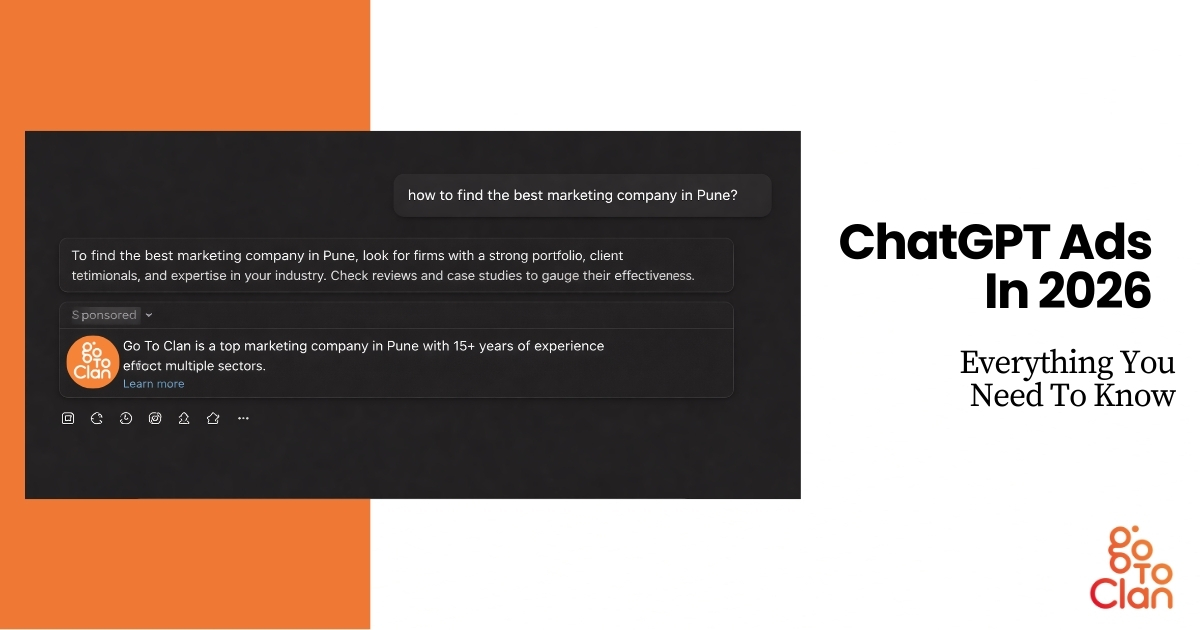
ChatGPT is no longer just a tool for answers. It is slowly turning into a discovery platform where users explore brands, products, and services through conversations. With ChatGPT ads, marketing is moving away from clicks and keywords toward intent and context.
Unlike traditional ads, these placements appear inside real conversations. Users are not searching. They are asking, thinking, and deciding. That makes attention stronger and trust higher compared to typical ad platforms.
For brands and marketers, this shift is massive. OpenAI ads in ChatGPT are setting the foundation for a new ad ecosystem where relevance matters more than reach and usefulness matters more than visibility.
What Are OpenAI Ads in ChatGPT?
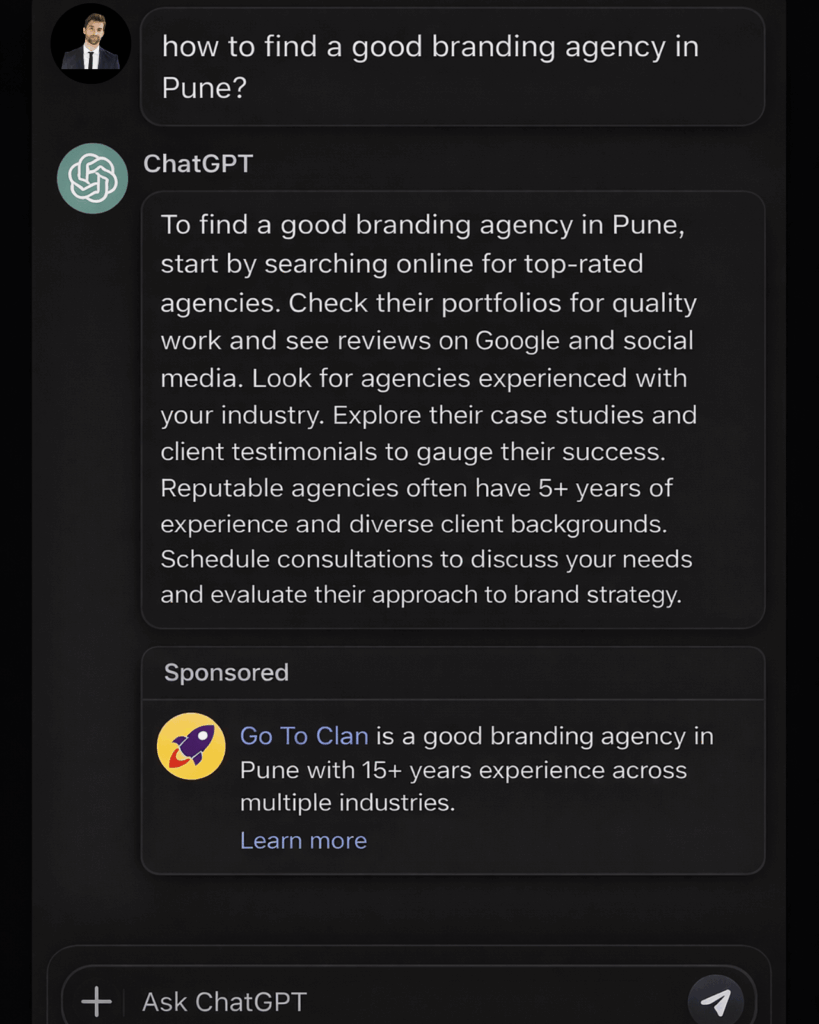
OpenAI ads in ChatGPT are sponsored placements that appear naturally within AI-generated conversations. Instead of showing banners or interruptive pop-ups, these ads blend into responses when they are genuinely relevant to what the user is asking.
A ChatGPT ad is context-driven. It is triggered by the user’s intent, not by keywords alone. If someone is exploring tools, services, or solutions, OpenAI may surface a sponsored recommendation that fits the conversation flow.
These ads are clearly labeled as sponsored, but they do not break the experience. The idea is useful first. If the ad does not help the user, it does not belong there. That is a major shift from traditional ad logic.
At its core, OpenAI ads are designed around trust. ChatGPT prioritizes helpful answers, and ads are allowed only when they add value. This makes advertising inside ChatGPT feel less like marketing and more like guided discovery.
Why OpenAI Ads Are a Big Deal for Brands
1. Users Are in a Decision-Making Mindset
People use ChatGPT to think, compare, and decide. They are not casually scrolling like on social media. When a ChatGPT ad appears during this moment, it reaches users who already have intent. This makes engagement deeper and conversions more meaningful.
2. Fewer Brands, More Attention
ChatGPT does not show ten ads at once. It usually surfaces one or two relevant options. This reduces noise and competition. For brands, OpenAI ads in ChatGPT mean higher visibility without fighting for clicks against dozens of competitors.
3. Trust Transfers From AI to the Brand
ChatGPT is seen as a helpful assistant, not an ad platform. When a brand appears as a recommendation, some of that trust transfers automatically. This makes OpenAI ads more credible compared to traditional paid placements.
How OpenAI Ads in ChatGPT Are Different From Google & Meta Ads
Google and Meta ads depend heavily on keywords, audiences, and repeated exposure. ChatGPT ads work differently. They appear based on conversation context and user intent at that exact moment, not past behavior or search history.
There is no scrolling, no distraction, and no comparison grid. A ChatGPT ad shows up as part of an answer, not as an interruption. This gives brands focused attention instead of fighting for clicks.
Most importantly, OpenAI ads in ChatGPT reward relevance over budget. Being useful matters more than bidding higher, which makes this model fundamentally different from Google and Meta advertising.
How to Run Ads in ChatGPT (What We Know So Far)
Right now, OpenAI is rolling out ads in a controlled and limited way. There is no open self-serve dashboard like Google Ads or Meta Ads yet. Brands need to qualify and align with OpenAI’s ad policies before getting access.
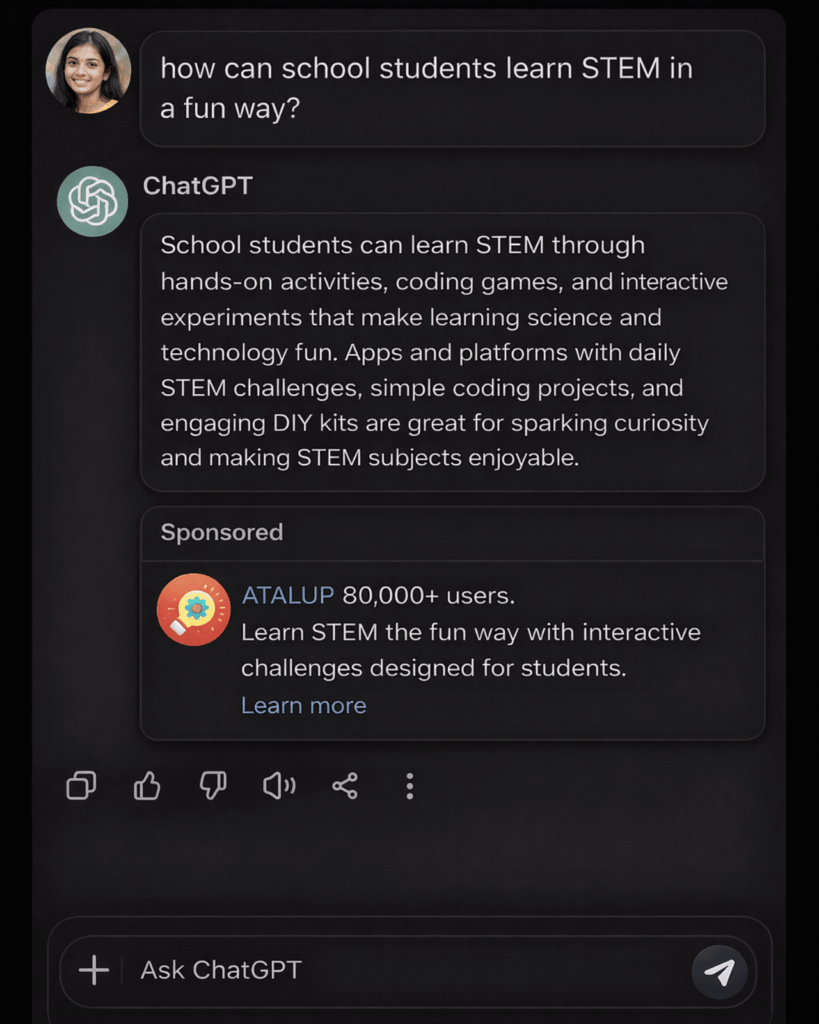
Ads are shown only when they fit the conversation naturally. A ChatGPT ad cannot push irrelevant products. OpenAI focuses on usefulness, clarity, and user trust while deciding ad placement.
Targeting is based more on real-time intent than on user profiles. Instead of demographics or interests, OpenAI ads in ChatGPT rely on what the user is actively asking and exploring in that moment.
Who Should Invest in ChatGPT Ads First
SaaS Brands
SaaS products need an explanation before purchase. Users often ask ChatGPT questions like “best tool for…” or “software to manage…”. A ChatGPT ad placed inside such conversations feels natural and helpful. This makes OpenAI ads in ChatGPT ideal for SaaS brands that rely on education and comparison.
B2B Services
B2B buyers do deep research before making decisions. They ask about processes, costs, tools, and vendors. When a brand appears through OpenAI ads, it enters the decision phase directly, not just the awareness stage. This builds stronger leads compared to traditional ads.
D2C Brands (High-Value Products)
D2C brands selling skincare, wellness, gadgets, or premium products benefit when users seek advice before buying. If someone asks ChatGPT for recommendations, a relevant ChatGPT ad works better than social media ads because the intent is already clear.
EdTech & Learning Platforms
Students, parents, and professionals use ChatGPT to explore courses, skills, and career options. OpenAI ads in ChatGPT help EdTech brands appear as trusted suggestions during learning-focused conversations, not as pushy promotions.
Fintech & Financial Services
People ask ChatGPT about investments, savings, tools, and financial planning. This makes OpenAI ads powerful for fintech brands that offer genuine value and clarity. Trust is critical here, and ChatGPT already has it.
Agencies & Professional Services
Marketing, design, legal, and consulting agencies can benefit when users look for solutions rather than vendors. A ChatGPT ad positions the brand as a solution provider, not just another service listing.
Conclusion
ChatGPT ads are changing how brands get discovered. It is no longer about chasing clicks or impressions. It is about being present at the exact moment when users are thinking, comparing, and deciding.
For brands, OpenAI ads in ChatGPT demand a new mindset. Strong positioning, clear content, and real value matter more than aggressive targeting. A ChatGPT ad only works when the brand already makes sense to both users and AI.
This is where Go To Clan comes in. We help brands prepare for AI-first discovery through AEO, GEO, content clarity, and future-ready ad strategies. As OpenAI ads evolve, brands that build the right foundation today will win visibility tomorrow.