

A Morphological Matrix is one of those tools that sounds complex but is actually very practical. Designers, marketers, and problem solvers use it to break a big idea into smaller parts and explore all possible combinations. Instead of waiting for a “creative spark,” this method gives you a clear system to generate ideas logically and creatively at the same time.
When you use a Morphological Matrix, you stop guessing and start exploring. You list down key elements of a problem, mix different options, and suddenly you have dozens of fresh concepts in front of you. It works especially well in design, branding, and strategy, where ideas need structure, not chaos.
Why is the Morphological Matrix Required in Problem Solving
The Morphological Matrix helps you think wider without losing control. Instead of jumping to the first idea that feels right, you explore multiple combinations in a structured way. This pushes creativity beyond habits and personal bias, which is exactly what good design and strategy need.
Many people also call it a Morphology Matrix, but the power stays the same. It turns vague thoughts into clear options, helps teams collaborate better, and makes idea generation faster and more confident. You do not wait for inspiration. You build it.
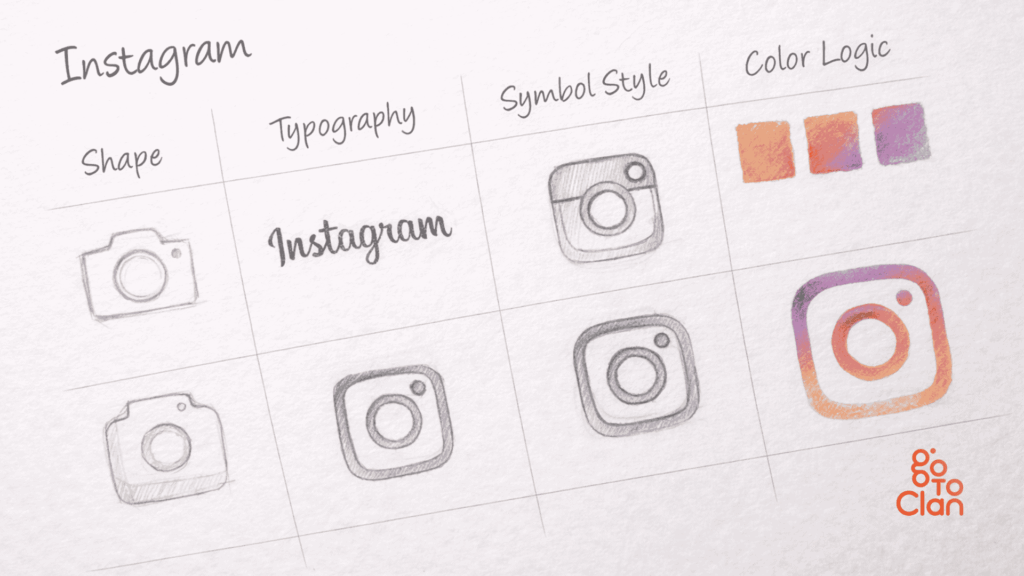
Here is the perfect example of the Morphology Matrix by Go To Clan
You can learn more about logo designing here:

How A Morphological Matrix Works (Step By Step)
Step 1: Define The Problem Clearly
Start with one clean line. What exactly do you need? A logo for a café, a landing page for a SaaS tool, a tagline for a travel brand. If your problem statement is messy, your ideas will also feel messy. This step sets the direction so you do not waste time exploring random concepts.
Step 2: Identify The Key Parameters
Now break the problem into parts that actually matter. Think of these as the “building blocks” of your final output. For a logo, you can pick parameters like icon style, typography, brand vibe, color family, and layout. For UI/UX, you can pick layout type, navigation style, interaction pattern, and content density. This is where the Morphological Matrix starts to become a system, not just brainstorming.
Step 3: Add Variations For Each Parameter
Under every parameter, list multiple options. Not one or two. Give yourself real range. Example: if the parameter is “icon style,” your options could be minimal line icon, bold solid icon, geometric icon, mascot, abstract mark, or lettermark. The goal is to create choices that feel different from each other, not small tweaks of the same idea.
Step 4: Create The Matrix Table
Put your parameters on the left and their variations across each row. Keep it simple. Even a rough table on paper works. This is the moment when ideas stop floating in your head and start becoming visible. A Morphology Matrix works best when your table looks clear enough that anyone on your team can understand it in 30 seconds.
Step 5: Mix And Match To Generate Concepts
Now pick one option from each parameter and combine them into a concept. Then repeat. You will quickly get 10, 20, or even 50 possible directions. Some combos will look bad, and that is fine. The real win is that you start finding unexpected combinations that you would never think of normally.
Step 6: Filter, Score, And Refine
Do not fall in love with every idea. Shortlist the best ones based on your goal. You can score them on simple things like brand fit, uniqueness, clarity, and usability. Then refine the top 3 to 5 concepts into stronger versions. This step turns raw combinations into real, usable directions.
Morphological Matrix in Logo Design
In logo design, a Morphological Matrix helps you break creativity into controllable parts instead of designing blindly. You separate a logo into elements like shape, typography, symbol style, and color logic, then explore combinations systematically. This method ensures your logo is not just “good looking” but also intentional, scalable, and aligned with brand meaning. Designers often sketch these combinations first to visually test balance, clarity, and recall before moving to digital execution.
Morphology Matrix Examples
Instagram Logo
- Shape & Symbol: Rounded square and camera icon suggest simplicity, creativity, and instant sharing.
- Typography: Clean, friendly lettering that feels modern and informal.
- Color Logic: Gradient blend shows diversity, energy, and constant content flow.
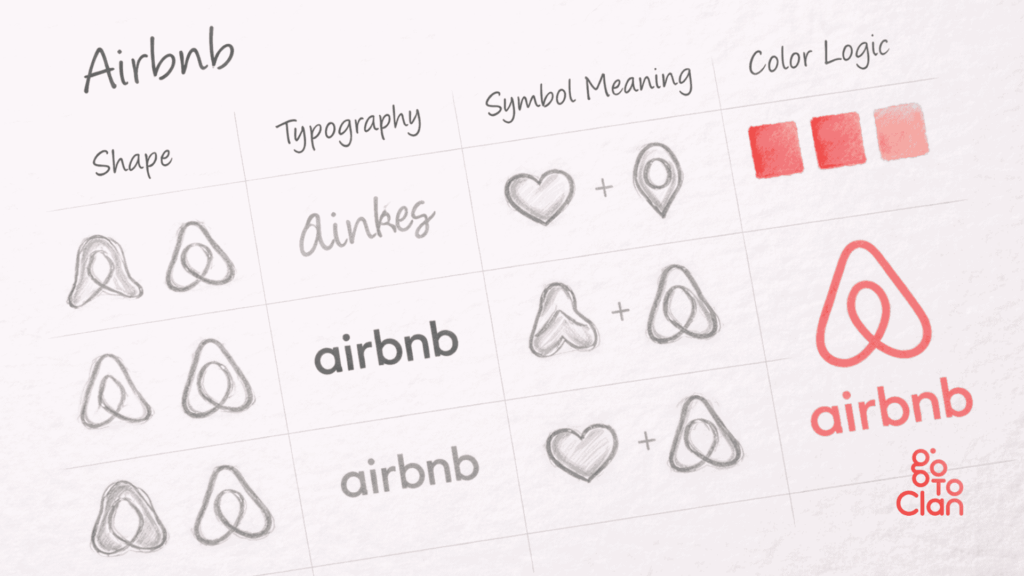
Airbnb Logo
- Shape & Symbol: Bélo symbol combines people, place, love, and belonging into one form.
- Typography: Soft, rounded lowercase type builds warmth and trust.
- Color Logic: Coral tone feels human, welcoming, and emotionally driven.
Morphological Matrix in UI/UX & Product Design
In UI/UX, a Morphological Matrix helps designers break digital experiences into parts like layout, interactions, visual patterns, and user flows. Instead of copying popular screens, you intentionally combine different UI decisions to create smoother, more intuitive products. This approach improves usability, reduces friction, and ensures every screen element serves a purpose rather than looking decorative.
Benefits of Using a Morphological Matrix
1. Faster Ideation
A Morphological Matrix removes the fear of starting. Instead of thinking “what should I design,” you already have defined elements and options in front of you. This structure speeds up ideation because you are not creating ideas from scratch. You simply combine, evaluate, and move forward. Teams generate more concepts in less time, and the process feels productive rather than exhausting.
2. Reduced Bias
When you use a Morphology Matrix, decisions stop depending on personal preferences or loud opinions in the room. Every parameter and variation gets equal attention. This reduces creative bias and forces designers and strategists to explore options they might normally ignore. The result is more objective thinking and more balanced design outcomes.
3. Scalable Ideas
Ideas created through a Morphological Matrix scale better because they come from a system, not intuition alone. Since every concept is built using defined components, it becomes easier to adapt the idea across platforms, formats, and future requirements. The Morphology Matrix ensures your ideas grow with the brand instead of breaking under expansion.
Common Mistakes While Using a Morphological Matrix
1. Unclear Problem Definition
Many people start a Morphological Matrix without clearly defining the problem. When the goal is vague, the matrix creates confusing combinations. Ideas feel disconnected and useless. Always write a clear problem statement before building the matrix. A strong start decides the quality of results.
2. Poor Parameter Selection
Another common mistake is choosing the wrong or weak parameters. If parameters do not matter to the design or product, the output will never work. People often add random elements just to fill the table. A good Morphology Matrix focuses only on elements that directly impact the final outcome.
3. Skipping Evaluation and Refinement
Some teams generate many combinations and stop there. They do not filter, test, or refine ideas. This wastes effort and creates chaos. A Morphological Matrix works only when you shortlist, score, and improve the best combinations. Selection is as important as generation.
Final Words
A Morphological Matrix helps you think clearly, create faster, and design with purpose. It turns messy ideas into structured options and gives creativity a direction. Whether you work on logos, UI/UX, or branding, this method helps you make confident design decisions instead of relying on guesswork.
At GoToClan, we use tools like the Morphological Matrix to build brands that actually work in the real world. We do not design for trends. We design with structure, logic, and creativity combined. If you want branding or design that feels intentional and scalable, this is exactly how we approach it.